
Overview
In my work as a system designer, I specifically specialize in developing and refining the numerical aspects of mechanics and content.
To accomplish this, I make use of several tools depending on the exact task at hand. These include:
● Spreadsheets for recording and editing large amounts of simple data
● Graphs for visualizing important data and outcomes, or when I’m designing algorithms from scratch
Spreadsheets
I have a considerable amount of experience with using spreadsheet programs, such as Microsoft Excel and Google Sheets. This experience is not limited to data entry and adjustment, either; I have a wealth of experience with writing complex formulas and formatting data in a clean and readable manner.
Shown here are a few samples of systems-centric spreadsheets I’ve worked on. Most were used in the development of my own games, but one reflects my knowledge and interest in dissecting and simulating an existing game’s systems.
Cardinomicon (Click to Expand)
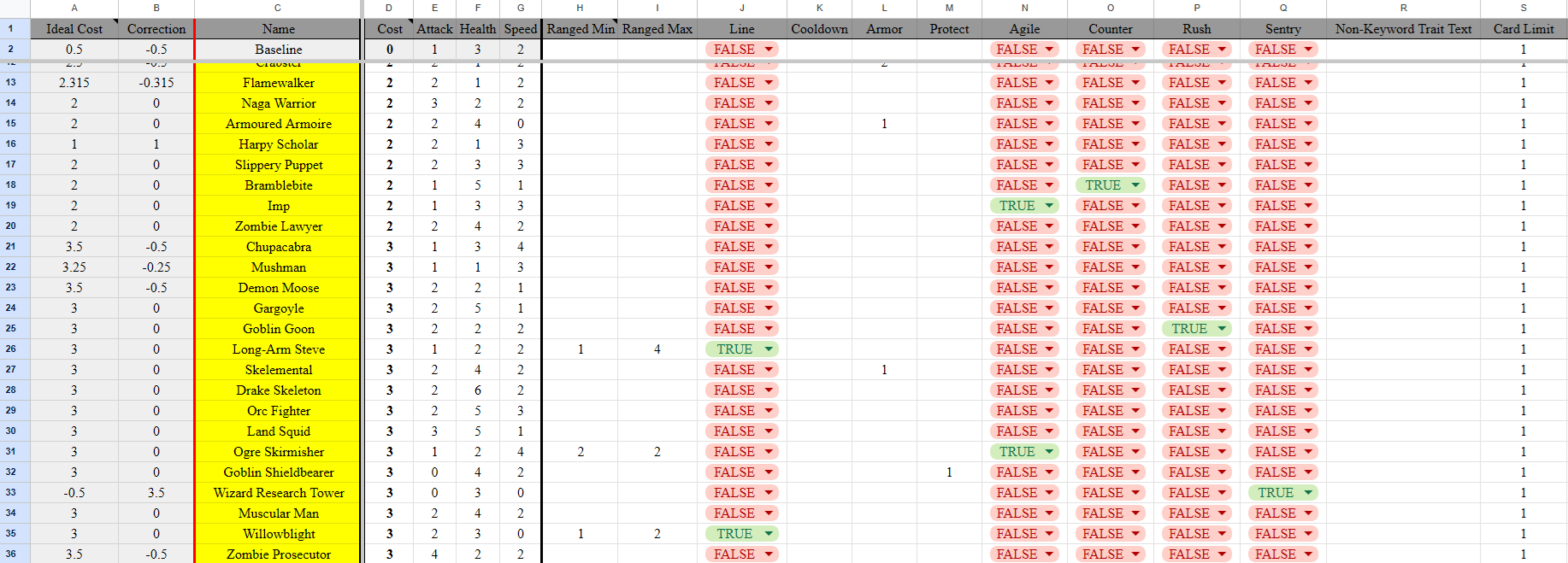
The monster card data spreadsheet used to design and balance cards for Cardinomicon.
This data could be directly fed into the game to update cards to their current spreadsheet version.
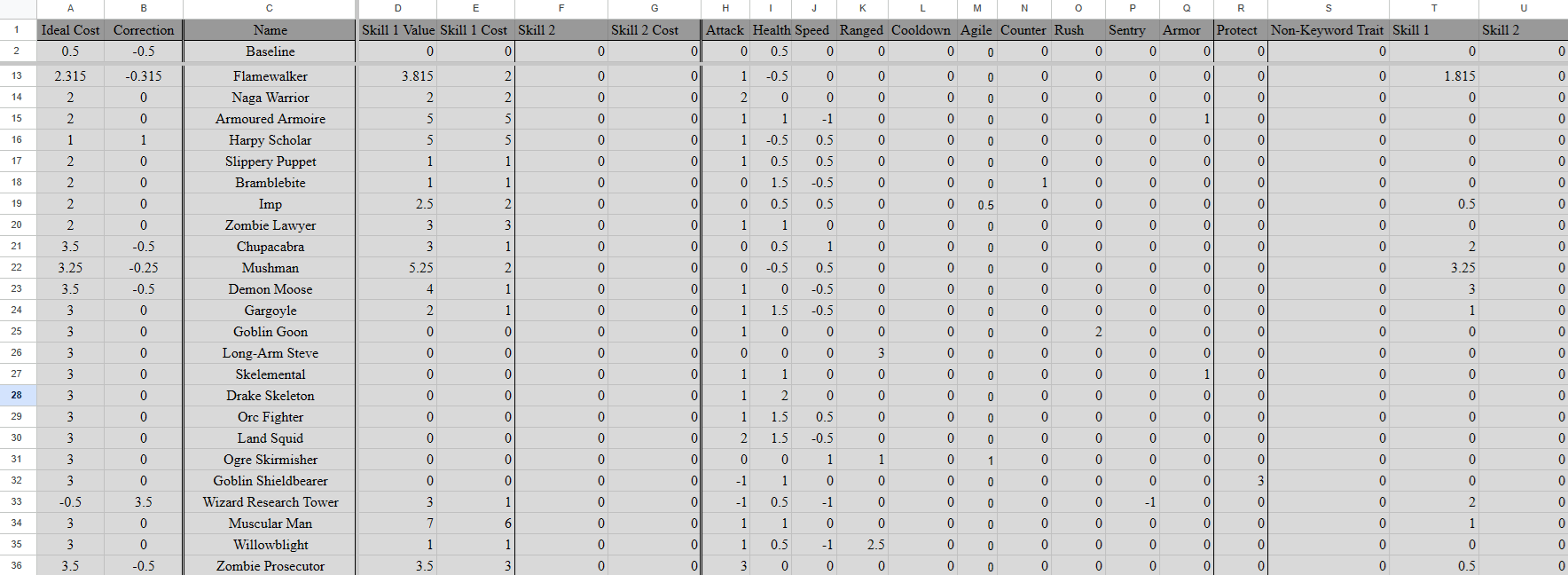
This sheet shows the backend calculations for the same set of monster cards.
The algorithms used in this sheet would produce a rough estimate of the card’s value, which we used to approximate what its cost should be.
Lunar Sword (Click to Expand)
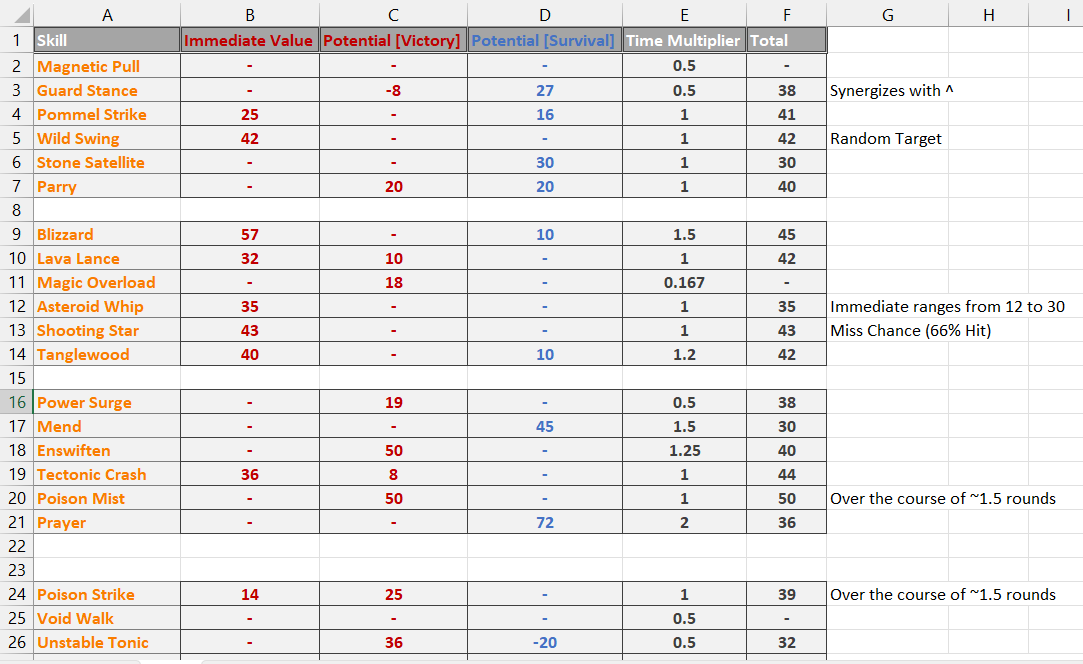
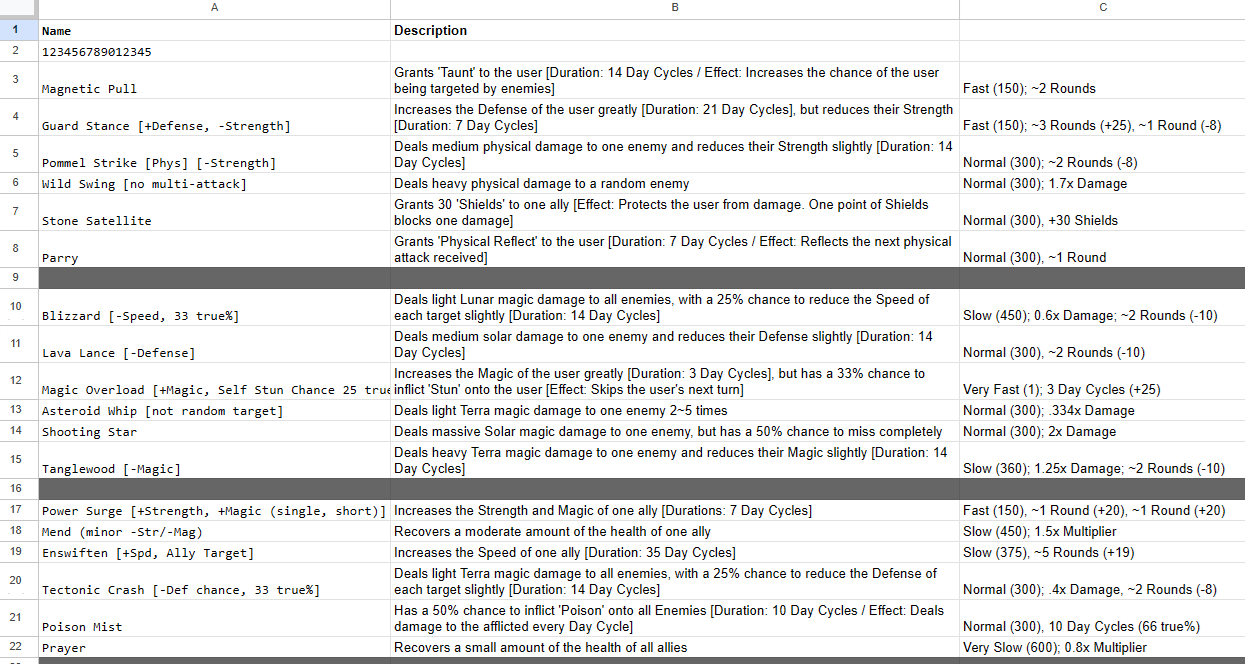
Back-facing spreadsheet with more specific data values that went directly into JSON.
Solo Projects (Click to Expand)
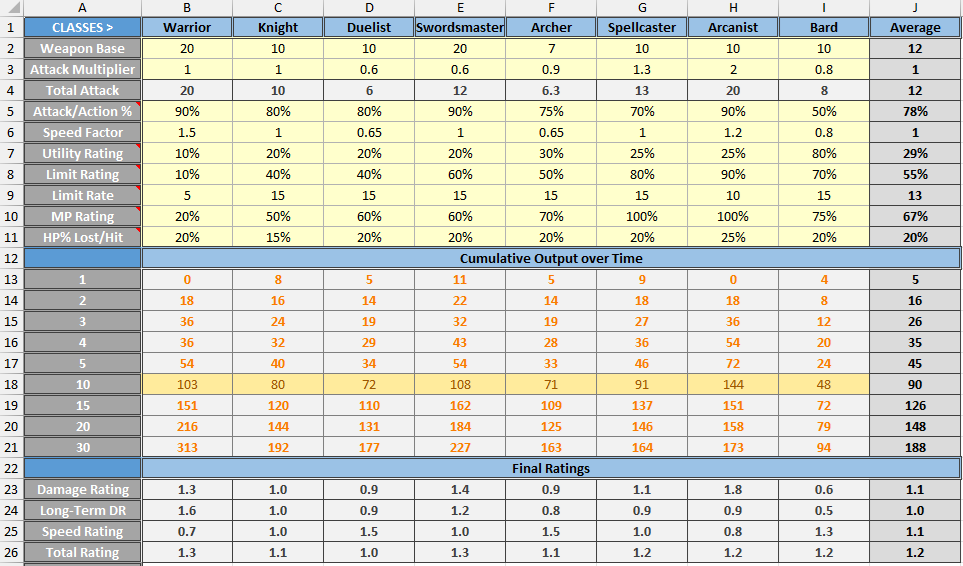
A character class balancing spreadsheet for an unreleased turn-based RPG I developed.
Values in yellow cells could be edited to affect the overall ratings and output forecast.
Other (Click to Expand)
The spreadsheet featured below is not one for a game project I developed myself; rather, it is a spreadsheet I created by analyzing the systems of the game Fire Emblem Engage. It allows a user to immediately calculate the expected stat distribution of any character on any possible class path.
I collected a large amount of internal game data, such as stat growth rates, stat caps, base stats, etc. This data is automatically used in the calculations based on five user-set values: Character, Basic Class, Advanced Class, Basic Level, and Advanced Level.
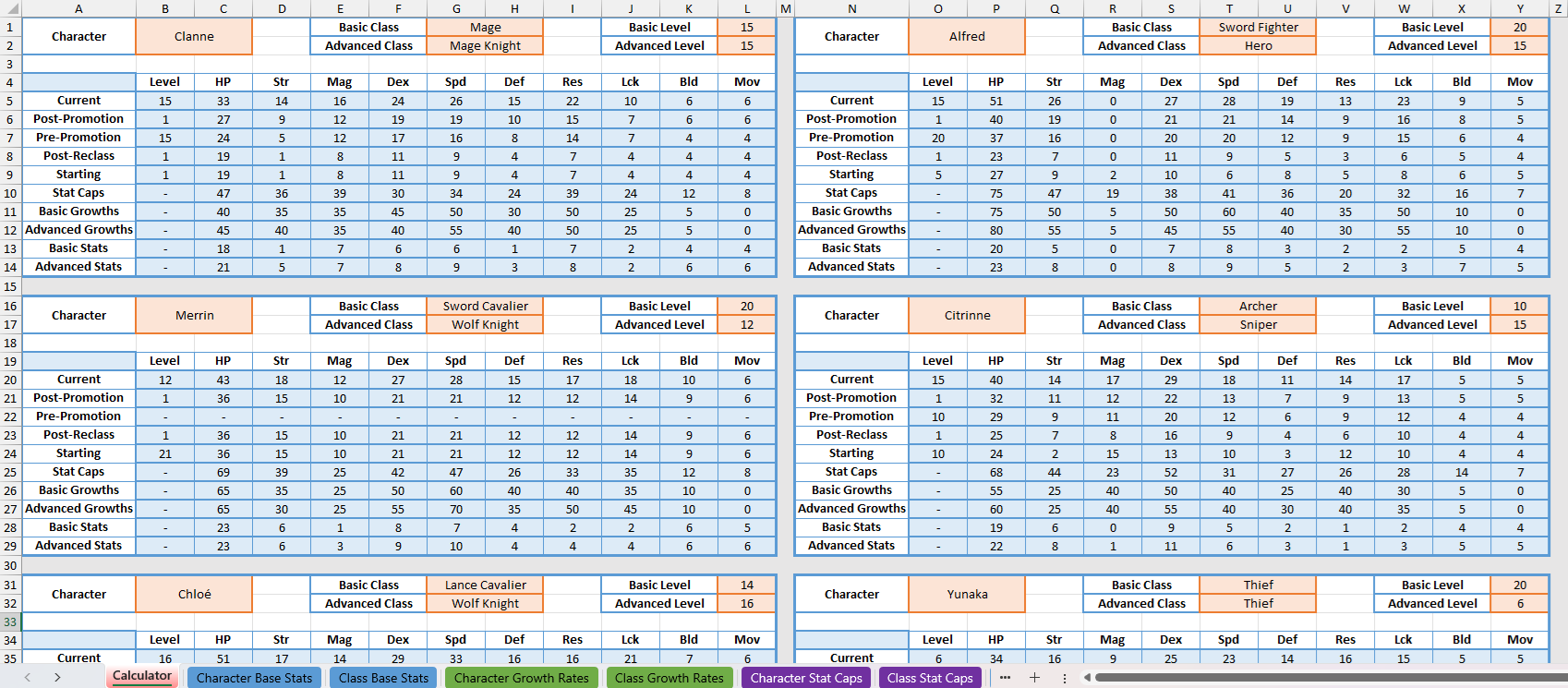
The calculation page, which allows a user to calculate stat distributions for several characters at once.
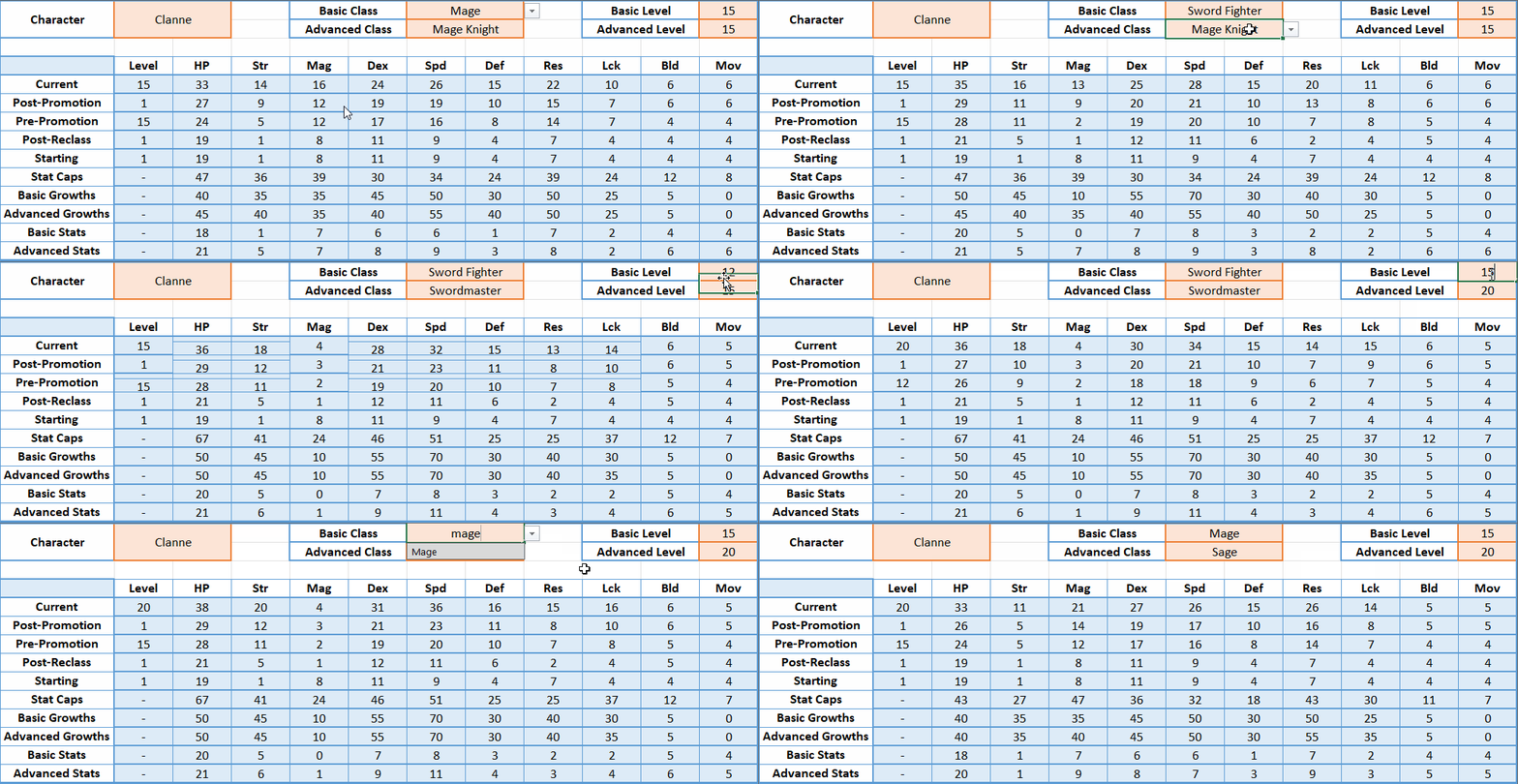
A single character calculation. It shows how various updates to the input values affect the output calculation.
Graphs
When it comes to developing complicated algorithms and formulas from scratch, I often make use of graphing calculators, such as Desmos. While spreadsheets excel at handling high volumes of data (such as when balancing the stats of every enemy in a game), I find graphs to be far more versatile when working with a small number of highly impactful or volatile variables (such as when designing a damage calculation formula or analyzing a probability curve).
Shown here are a few samples of graphs I’ve used in development.
Lunar Sword (Click to Expand)

A set of different damage formulas I experimented with for Lunar Sword.
Analyzing different curves through this graph helped me narrow down which would work the best for the game.
Crimson Incantation (Click to Expand)
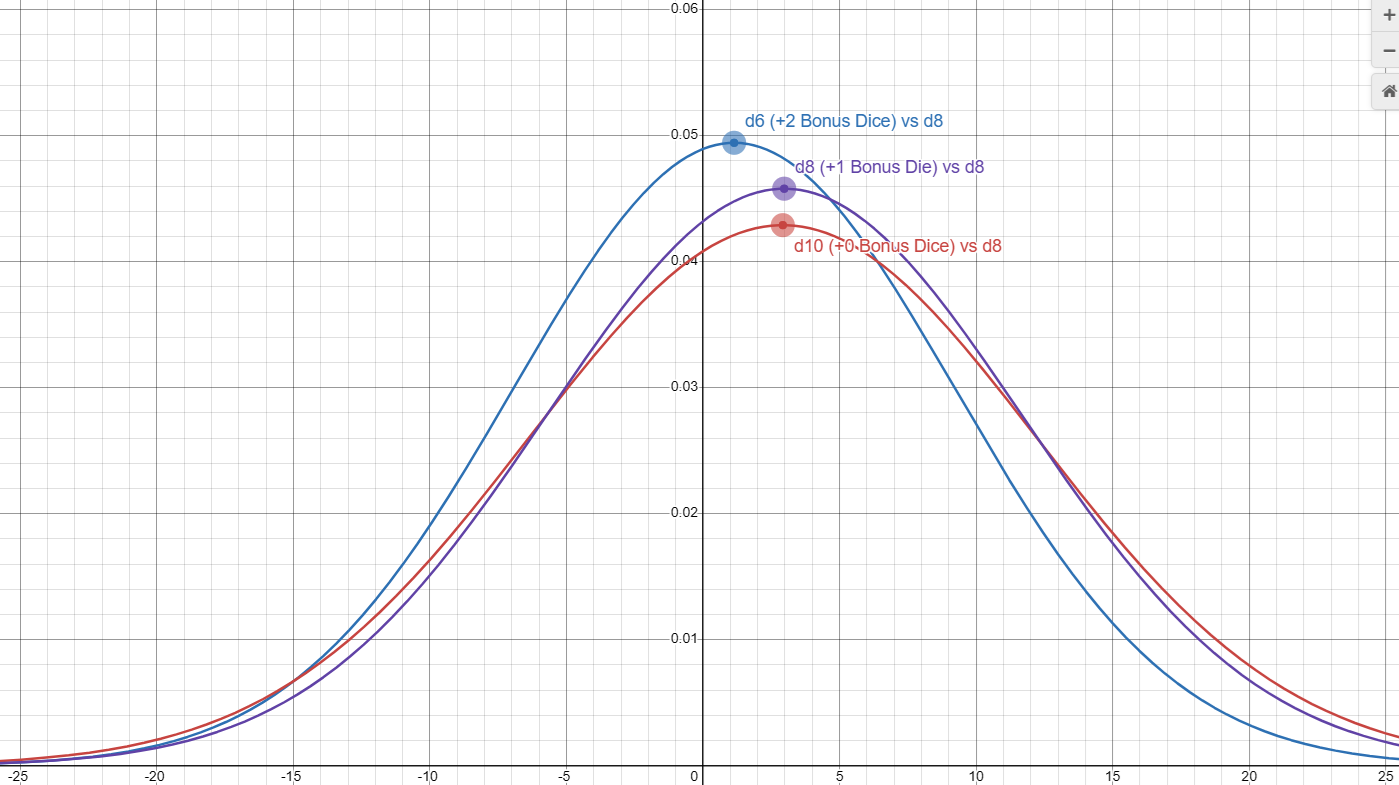
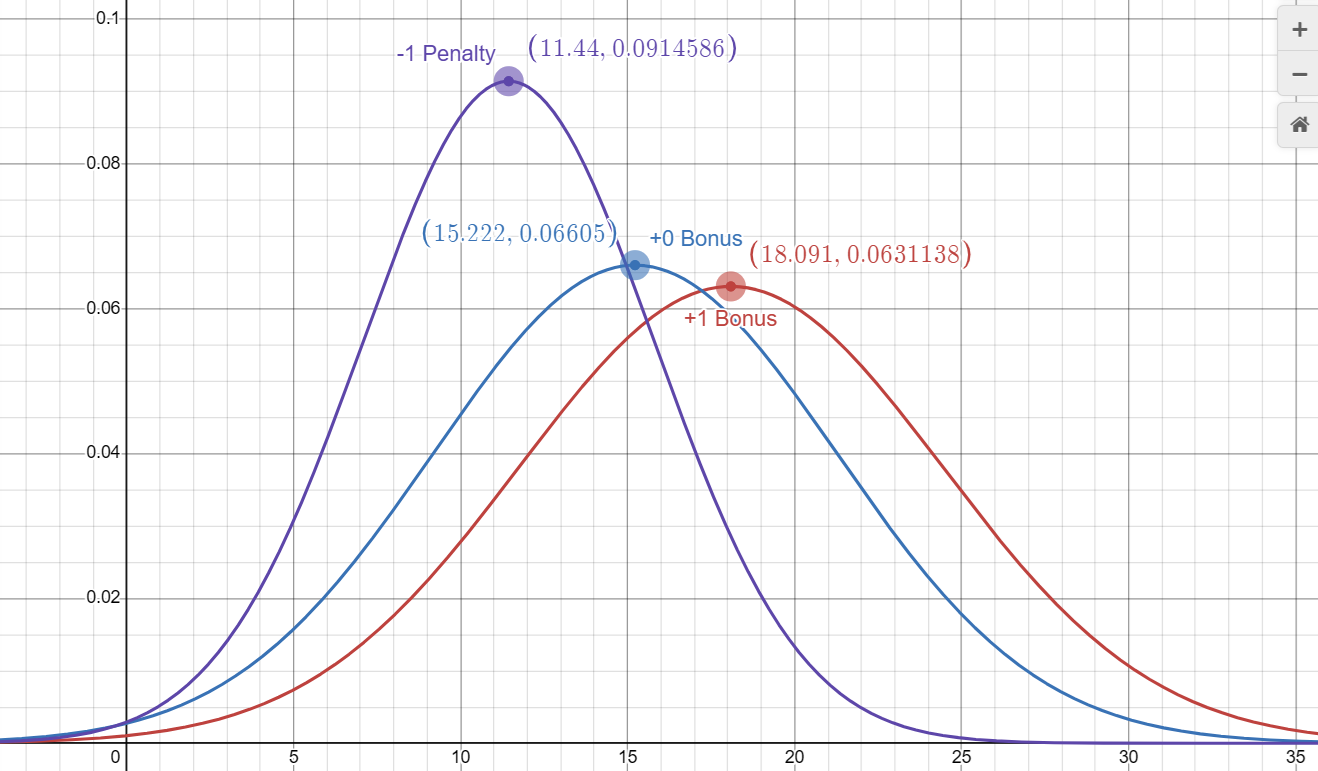
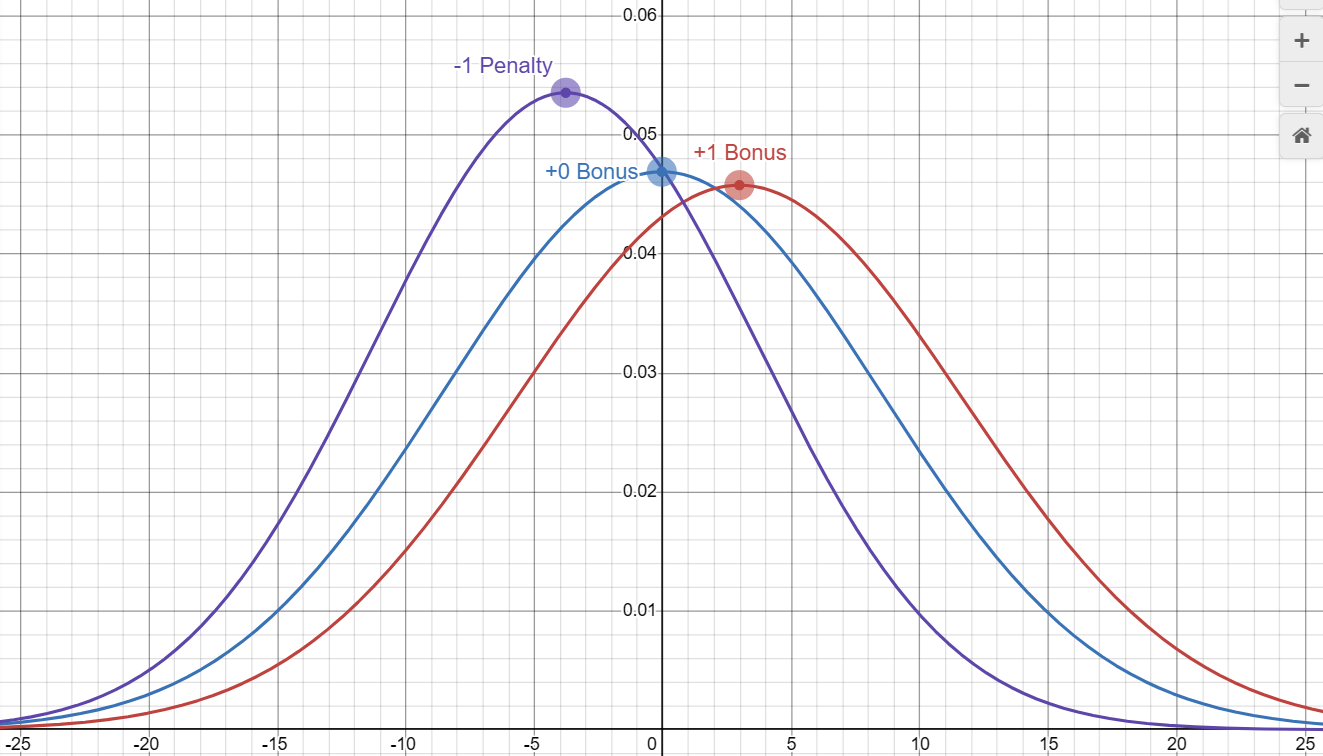
Many probability curves were used to balance the dice system of Crimson Incantation.
The graphs were made using data from a Monte Carlo simulation.
Code Simulations
In practice, many game mechanics and systems are too complicated or cumbersome to be dealt with easily by pure mathematics. In these scenarios, I write code simulations to aid my design. For systems involving chance, I will often create Monte Carlo simulations to brute force the probabilities of outcomes that would otherwise be extremely complex to calculate manually. Even for deterministic systems, there are many cases where it is easier to write a program to directly simulate abstracted interactions than it is to develop an algorithm from scratch.
Shown here are a few samples of simulations I’ve programmed for systems I developed.
Lunar Sword (Click to Expand)
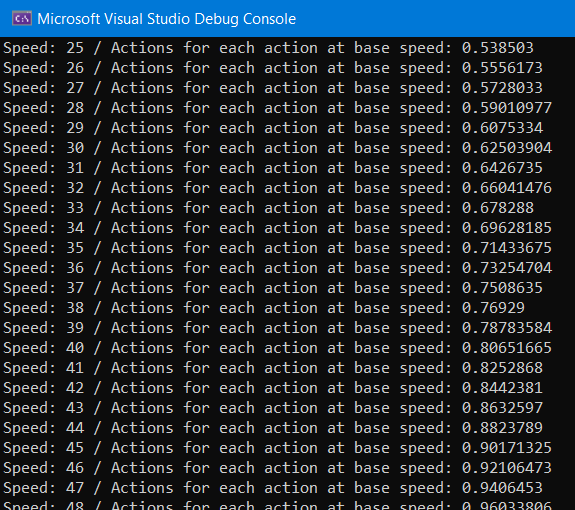
A simulation I created to test the practical effect of Lunar Sword‘s Speed stat on the average number of actions a character will get compared to others.
Crimson Incantation (Click to Expand)
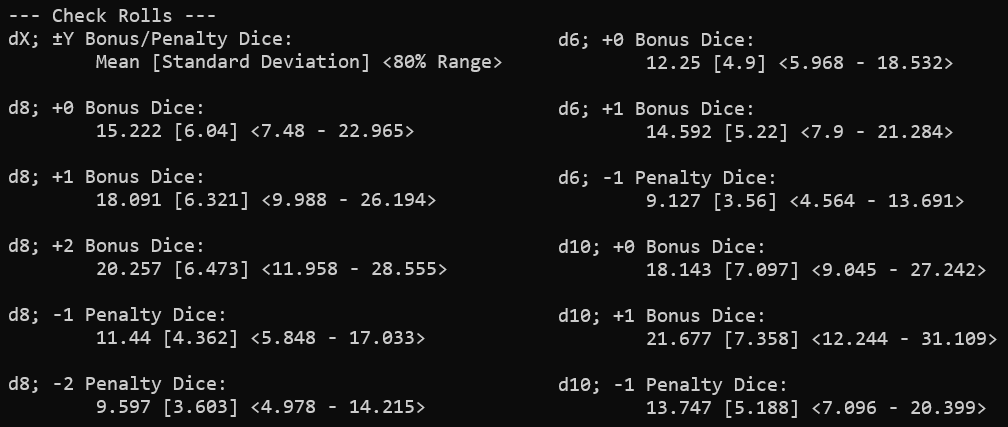
Simulation results for ‘check’ rolls in Crimson Incantation.
Probabilistically, bonus and penalty dice affect the outcome of rolls in complex ways, making Monte Carlo simulations like this ideal.
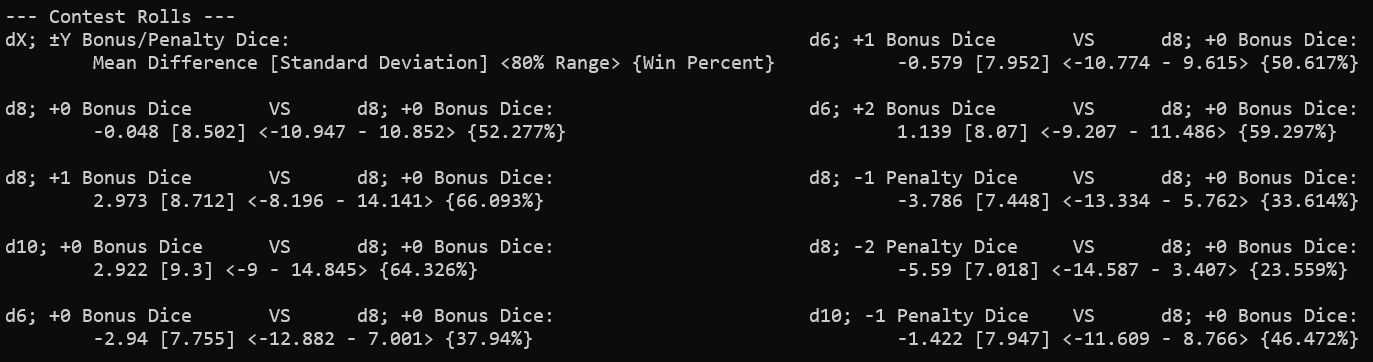
Simulation results for ‘contest’ rolls in Crimson Incantation.
As Crimson Incantation features contested rolls quite frequently, testing different bonuses, penalties, and base statistics against each other—as shown here—was important.
 Connor Runyon